
The Trial
Basic Facts
The Trial (German: Der Prozess) is a novel written by Franz Kafka between 1914 and 1915, published posthumously on 26 April 1925, one year after the author's death. Kafka's friend Max Brod edited and published the unfinished manuscript against Kafka's explicit wish to burn all his writings. The novel is a hallmark of modernist literature, often labeled as existentialist or absurdist, and remains one of the most influential works of the 20th century.
Plot Overview
Josef K., a senior bank clerk, is arrested on his thirtieth birthday by two guards from an unspecified authority. He is never told what crime he has committed, and the arrest itself is strangely casual—the guards eat his breakfast and discuss his underwear. The rest of the novel follows K.'s desperate attempts to navigate a labyrinthine, corrupt legal system. He hires a lawyer who produces endless petitions but never reveals the charges; he visits the court in a tenement attic, where the proceedings are filthy and chaotic; he consults a painter who claims to have connections but can only offer a temporary acquittal. In the cathedral, a chaplain tells him the parable "Before the Law": a man from the country spends his whole life trying to gain entry to the Law, only to be told at the moment of his death that the door was meant for him alone. The novel ends with K. being led to a remote quarry by two men in black coats and stabbed to death "like a dog." He never learns his crime.
Themes and Style
Central themes include bureaucratic oppression, the absurdity of existence, the inscrutability of guilt, and the alienation of the individual. Kafka's prose is remarkably clear and matter-of-fact, which makes the surreal events feel chillingly real. The novel is filled with dramatic irony: the more K. tries to prove his innocence, the more he appears guilty. As noted by critic David Foster Wallace, the work possesses a dark, almost comedic tone—the absurd situations are both terrifying and funny. Kafka's own life—his job at an insurance company, his strained relationship with his father, his Jewish identity in a German-speaking minority—permeates the novel's atmosphere of anxiety and helplessness.
Influence and Legacy
The Trial has had an immense impact on literature, philosophy, and popular culture. It is a precursor to existentialism, inspiring writers such as Albert Camus and Jean-Paul Sartre, and its influence extends to postmodernism, absurdist theatre, and even film. The term "Kafkaesque" has entered the lexicon to describe nightmarish bureaucratic situations beyond reason. The novel continues to be widely studied, debated, and adapted, cementing Kafka's reputation as a visionary of the modern condition.
The novel's first English translation, by Willa and Edwin Muir, was published in 1937 by Victor Gollancz Ltd, introducing Kafka's work to an Anglophone readership. This translation, though later criticized for its liberties, remained the standard for decades. A subsequent edition by Everyman's Library in 1992, with the same translation, further cemented the novel's place in the literary canon. The translation history reflects the broader challenge of rendering Kafka's precise, ambiguous prose into English, a task that has prompted multiple later retranslations aiming for greater fidelity to the original German.
About the Author
Early Life and Education
Franz Kafka was born on 3 July 1883 in Prague, then part of the Austro-Hungarian Empire, into a German-speaking Jewish family. His father, Hermann Kafka, was a domineering merchant, and his mother, Julie Löwy, came from a more intellectual background. The oppressive relationship with his father became a lifelong source of anxiety and a recurring theme in his writing. Kafka studied law at the German Charles-Ferdinand University in Prague, earning a doctorate in 1906, after briefly trying chemistry and German studies.
Career and Writing
After graduating, Kafka worked for a law firm and then from 1908 at the Workers' Accident Insurance Institute in Prague, a job he found tedious but necessary. He considered writing his true calling, but his demanding office work left him little time. He published only a handful of short stories during his lifetime, including The Judgment (1912), The Metamorphosis (1915), and A Country Doctor (1919). His most famous works—the novels The Trial (1925), The Castle (1926), and Amerika (1927)—were all published posthumously by his friend Max Brod, who ignored Kafka's instructions to burn the manuscripts. Kafka's style blends precise, clear prose with surreal, nightmarish scenarios, exploring themes of alienation, guilt, and absurd bureaucracy.
Personal Life and Death
Kafka had several intense but troubled relationships. He was engaged twice to Felice Bauer (1912–1917) and later corresponded with Milena Jesenská, a Czech journalist. In his final years, he lived with Dora Diamant, a young Jewish woman. He wrote a famous 100-page Letter to His Father (never delivered) analyzing his deep-seated conflicts. In 1917 he was diagnosed with tuberculosis, and after seven years of illness, he died on 3 June 1924 at the Kierling Sanatorium near Vienna. He was buried in the New Jewish Cemetery in Prague.
Legacy
Kafka is now regarded as one of the most influential writers of the 20th century. His works have inspired existentialism, postmodernism, and magical realism, and his name gave rise to the term "Kafkaesque" to describe inescapable, irrational bureaucratic systems. His novels and stories continue to be widely read, studied, and adapted, cementing his place as a literary genius who captured the anxieties of modern life.
StoryFlow
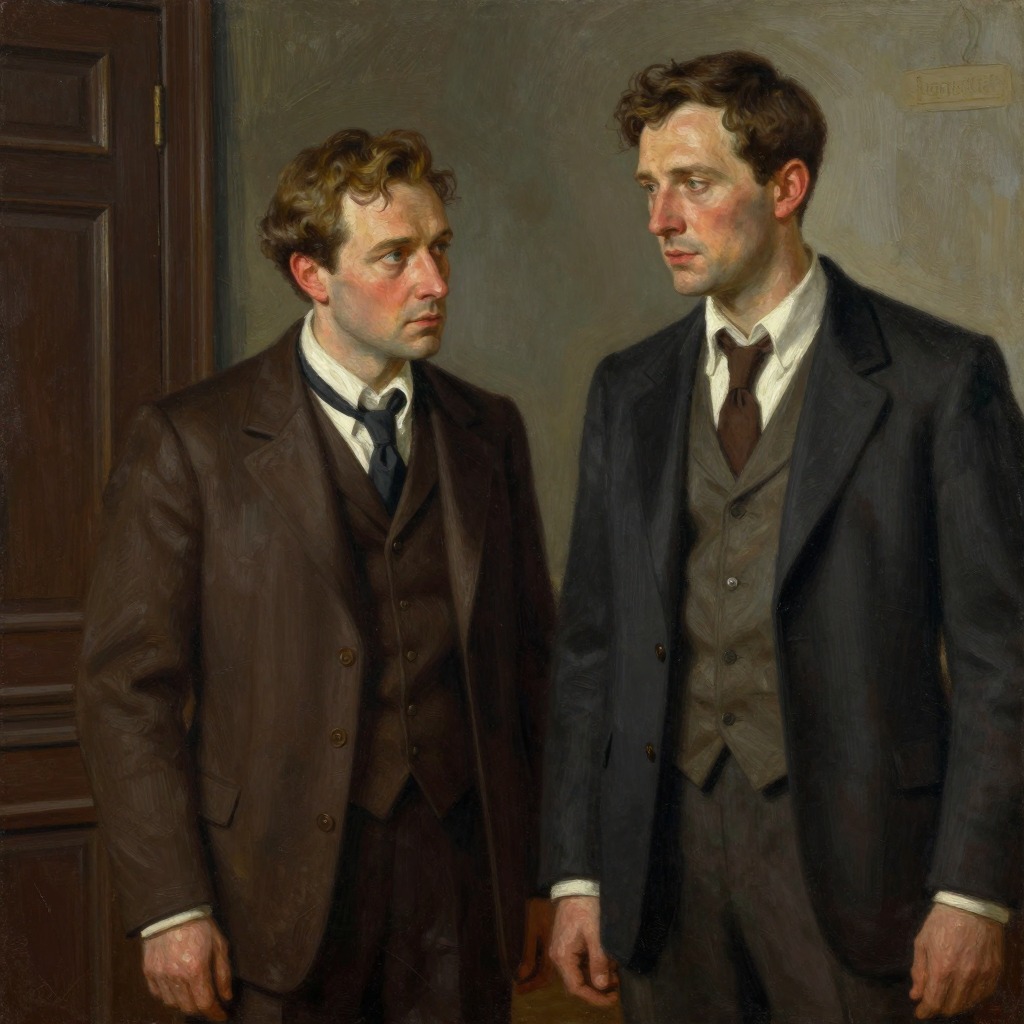
Josef K.'s Arrest and the Onset of the Trial
The narrative thread tracing Josef K.'s unexpected arrest, his initial confusion, and the beginning of legal proceedings that upend his ordinary life.
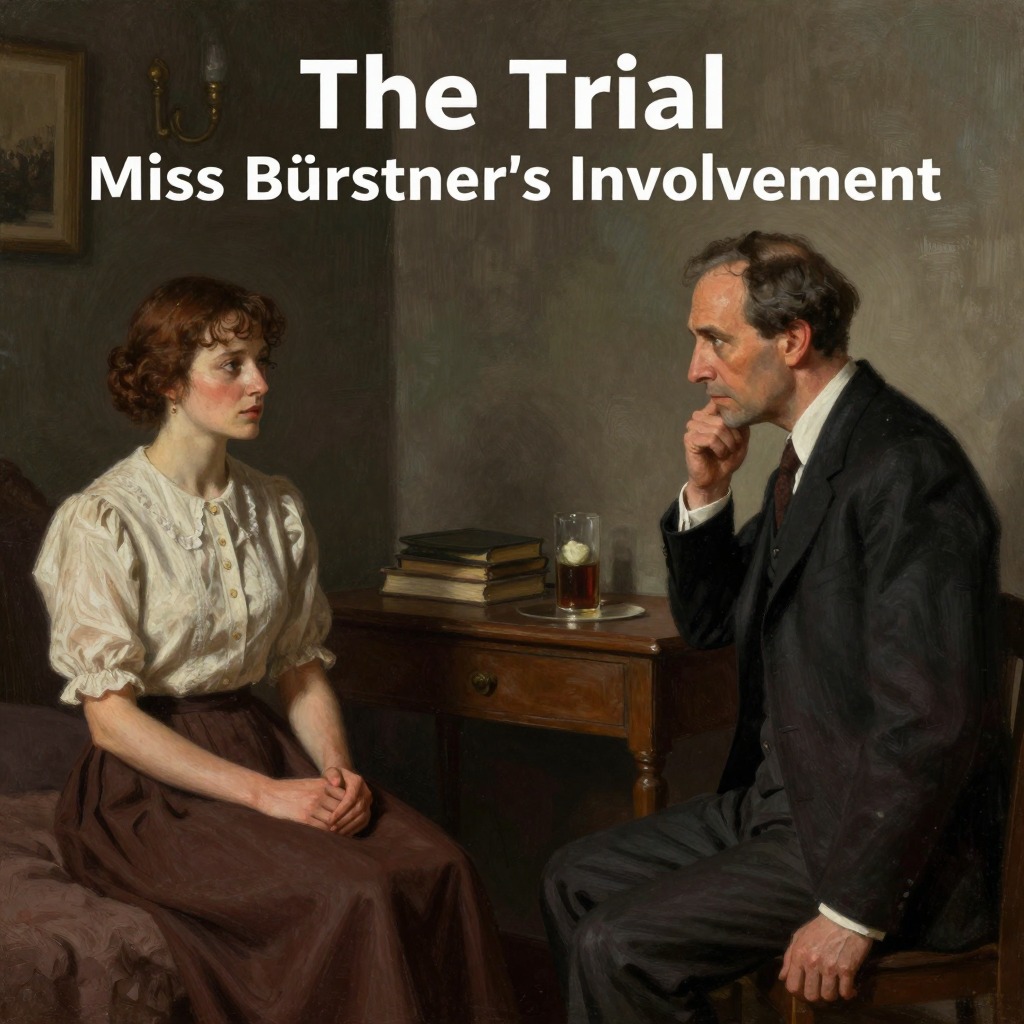
Miss Bürstner's Involvement
The subplot tracing K.'s relationship with Miss Bürstner, from the initial intrusion into her room to her eventual rejection and K.'s lingering guilt.
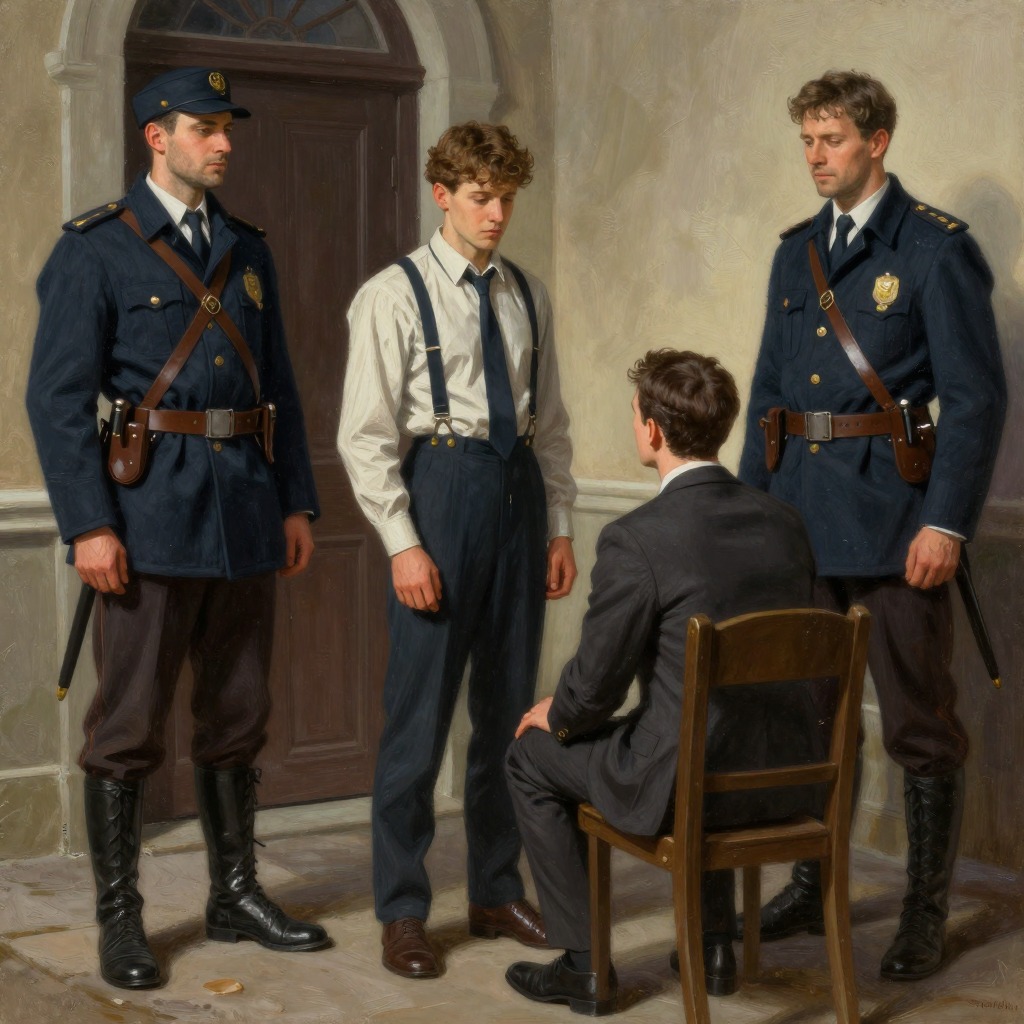
The Whipping of the Guards
The subplot involving the punishment of the two guards, Franz and Willem, for their misconduct during K.'s arrest, and K.'s failed attempt to intervene.
